Let's be honest. You booked the brand session. You're excited. And then approximately 48 hours before your shoot, you open your closet and completely blank.
Suddenly nothing fits right, everything feels too casual or too stiff, and you're standing there in your third "maybe this?" outfit wondering if you should just cancel and reschedule until you figure your life out.
You won't need to. This is the guide I wish every client had before their session — a no-fluff breakdown of what to wear for brand photos so you can show up feeling like yourself and walk away with images that actually look like your business.
Start with your brand, not your wardrobe
Before you pull a single thing off a hanger, ask yourself: what feeling do I want people to have when they land on my website?
Warm and approachable? Polished and elevated? Bold and creative? Your outfit should answer that question before you even open your mouth — or in this case, before anyone reads a single word of your copy.
If your brand is earthy and organic, a structured blazer might feel off. If you run a high-end consulting firm, your favorite band tee probably isn't it. Your clothes are part of your visual story. They should feel like an intentional chapter, not an afterthought.
Colors that photograph beautifully
Color is one of the biggest things I see people get wrong — not because they have bad taste, but because what looks great in your bathroom mirror can do something completely different on camera.
Here's what works: rich, muted tones. Think dusty sage, warm terracotta, deep burgundy, soft cream, moody navy. These colors photograph with depth and work beautifully whether we're shooting in your studio, your workspace, or outside on location around Buffalo.
Neutrals are your safest bet if you're unsure. A well-fitted camel coat, a crisp white linen shirt, a soft gray knit — these never fight with the background and keep the focus exactly where it belongs: on you.
Here's what tends to cause problems: neon brights, stark white (it blows out easily in natural light), and anything with a strong color clash between pieces. That doesn't mean you can't be colorful — it just means being intentional about it.
If you have brand colors, lean into them. Wearing something that ties back to your logo or website palette creates instant visual cohesion across all your marketing.
I'll keep this simple.
Patterns, textures, and logos — the honest truth
Busy patterns — think small busy florals, tight stripes, loud plaid — tend to vibrate on camera. They pull focus away from your face, distract in the background of images, and date quickly. If you love pattern, go for something oversized and deliberate rather than all-over print.
Subtle textures, on the other hand, are genuinely great. A chunky knit, a linen blazer, a leather jacket, a silk blouse with movement — texture gives the camera something interesting to work with and adds dimension to your photos without competing for attention.
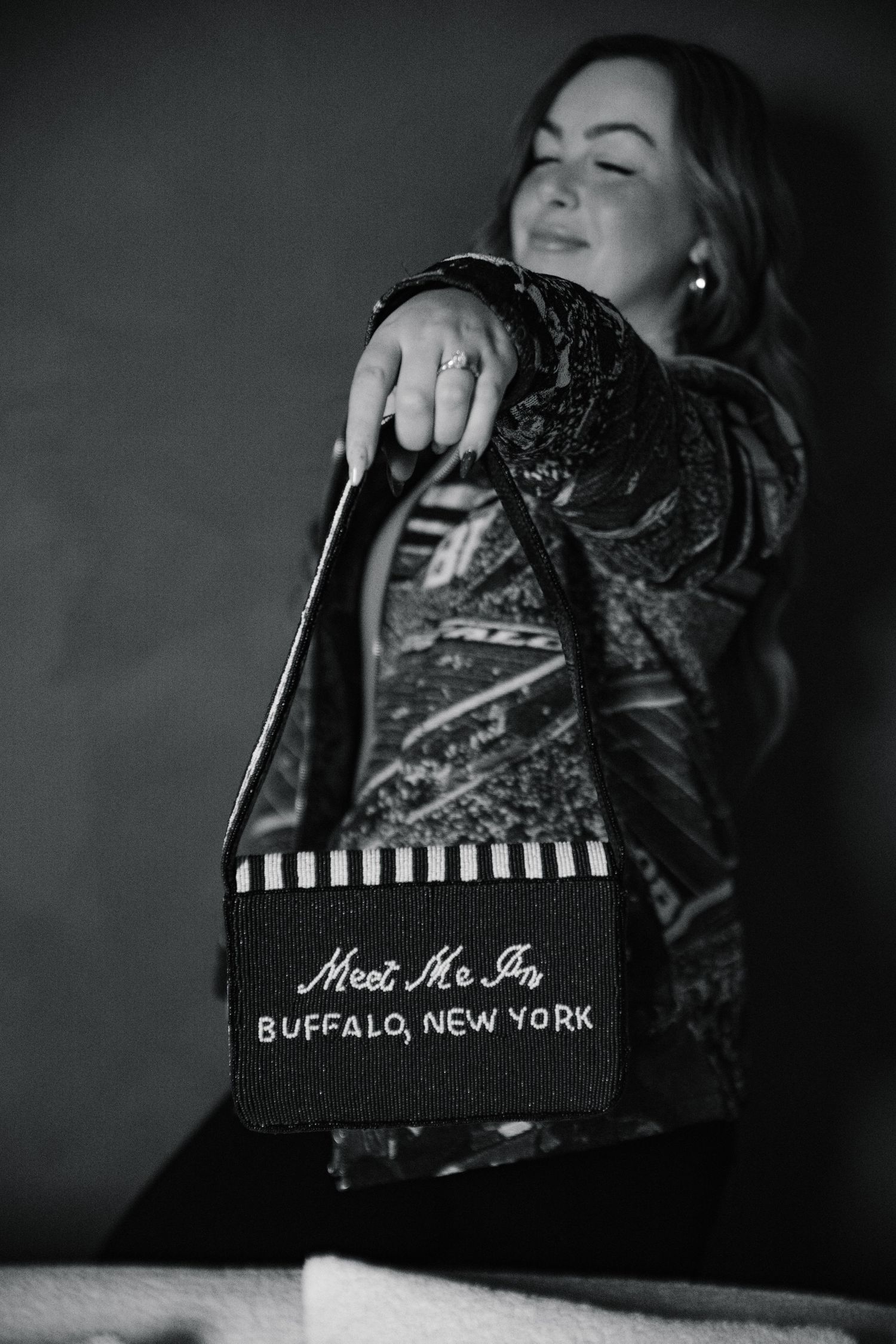
Logos are a hard pass. A big branded logo across your chest makes your photos look like an ad for someone else's company. You're building your brand here, not theirs.
What NOT to wear (straight talk)
Since you asked, kinda:
Anything that doesn't fit well right now. Not "fits great when I hold my breath" — fits well right now, today, on your actual body. Ill-fitting clothes read on camera in a way that's hard to edit around, and more importantly, they make you feel uncomfortable. Discomfort shows.
Clothes that are uncomfortable to sit, stand, or move in. Brand sessions aren't static. We'll move around your workspace, shift locations, change up the energy. If you can't sit down without tugging at something, leave it at home.
Anything you'd never normally wear. This one is big. If you're a creative who lives in relaxed, earthy layers and you show up in a power suit because you thought you "should," it's going to feel performative — and it's going to look that way too. Your clients hire you partly because of who you are. Look like that person.
Bring options — seriously
My biggest practical tip: don't commit to one outfit. Bring two or three.
A complete outfit change mid-session does something great — it makes your gallery feel more versatile without requiring a full second shoot day. You get casual and polished. Relaxed and put-together. Indoor and outdoor. More content, more range, more ways to use your photos across your website and socials.
I always leave room in our session timeline for a quick outfit swap, whether we're at your studio, your shop, or out somewhere around Buffalo. Plan for it.
A few final notes
Hair and makeup should feel like an elevated version of your normal. Not a costume. Not a special occasion version of yourself. Just you, turned up slightly.
Accessories are welcome — they add personality and texture. Just make sure they don't jingle, shift constantly, or distract. A great earring or a meaningful necklace can tell a story. A stack of bangles that move every time you gesture might get old after take three.
And iron your clothes. I say this with love. Wrinkles that seem minor in person read prominently on camera, and while I can do a lot in editing, I'd rather spend that time making your photos exceptional than smoothing out a crease in your sleeve.